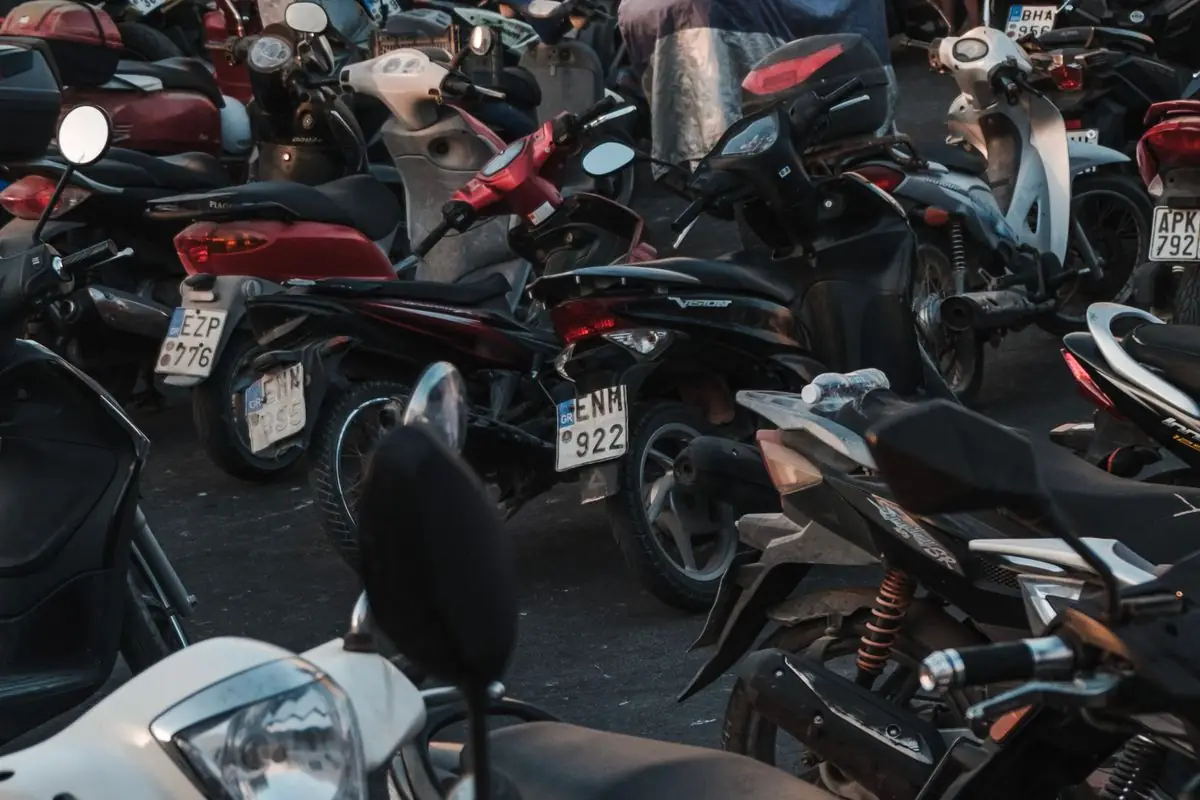
In Vietnam, most parking is motorbike parking. Yet many smart-parking systems are designed for cars: a camera reads the plate in the lane, the barrier opens, no card needed. Take that design into a workers’ or students’ bike park and you meet a problem the brochures rarely mention: motorbike plates are much harder to read.
Two lines, small characters
A car plate has one line of large characters at a fairly fixed height. A motorbike plate is smaller, has two lines, tilts with the bike, and is often partly hidden by the rider’s leg or a load. The software has to split the two lines correctly before reading each character; one wrong step and the whole plate is wrong.
A research group in Brazil measured exactly this. They took 8,000 photos from toll plazas, half cars and half motorbikes with two-line plates, and ran a commercial plate reader on them. It read 94.3% of car plates correctly, but only 45.7% of motorbike plates. None of the models they tried passed 70% on this set.
This does not mean every camera reads only half of motorbike plates. A fixed lane camera with infrared light and a carefully set angle will do better than toll-plaza photos. But it shows one thing: a bike park that relies on the plate alone will sometimes fail to recognise a bike, and then a guard has to sort it out by hand, in the middle of rush hour.
Rain, poor light, tilted plates
Even with one-line car plates, conditions pull results down clearly. One set of 250,000 photos was taken by roadside parking attendants in China from 7:30 am to 10 pm, in all weather. The best model in that study read correctly:
- 98.5% of normal photos
- 96.9% of dark or unevenly lit photos
- 92.5% of tilted plates
- 87.9% of photos with rain, snow or fog
Those photos were taken with handheld devices; a fixed lane camera may be less affected. But the evening shift change in the rainy season is also when the bike park is busiest, and a two-line motorbike plate in the rain is no easier to read than a car plate.
The card first, the plate and photos to cross-check
So MSTAR Park does not bet on a single layer of recognition. Every vehicle pass has three things:
- The card: the main identity. One tap tells whose bike it is, monthly pass or single ticket.
- The plate: the camera reads it and attaches it to the entry. If it reads, that is one more check; if not, the bike still passes on the card.
- Two photos: the plate and the rider, taken as the card is tapped.
At the exit, the lane screen puts the entry photo next to the exit photo. Right card but a different plate, and the barrier stays down while the guard is alerted. When someone reports a lost card, the guard looks the entry up by plate, compares the rider’s photo at entry with the person in the lane, then blocks the old card so nobody can use it again.
Five questions to ask when choosing a system for a motorbike park
- What share of two-line motorbike plates does it read correctly, measured where, in what conditions?
- When the plate cannot be read, how does the bike get through, who handles it, how long does it take?
- At the exit, what does the guard see to compare with the entry?
- How are bicycles and e-bikes without plates handled?
- When a card is lost, how is the bike collected, and how is the old card blocked?
MSTAR Park does not publish a motorbike plate-reading rate yet, because it has not been measured at any site. During a pilot, MSTAR engineers sample vehicle passes, check every photo and publish the measured figure, even if it is worse than hoped.