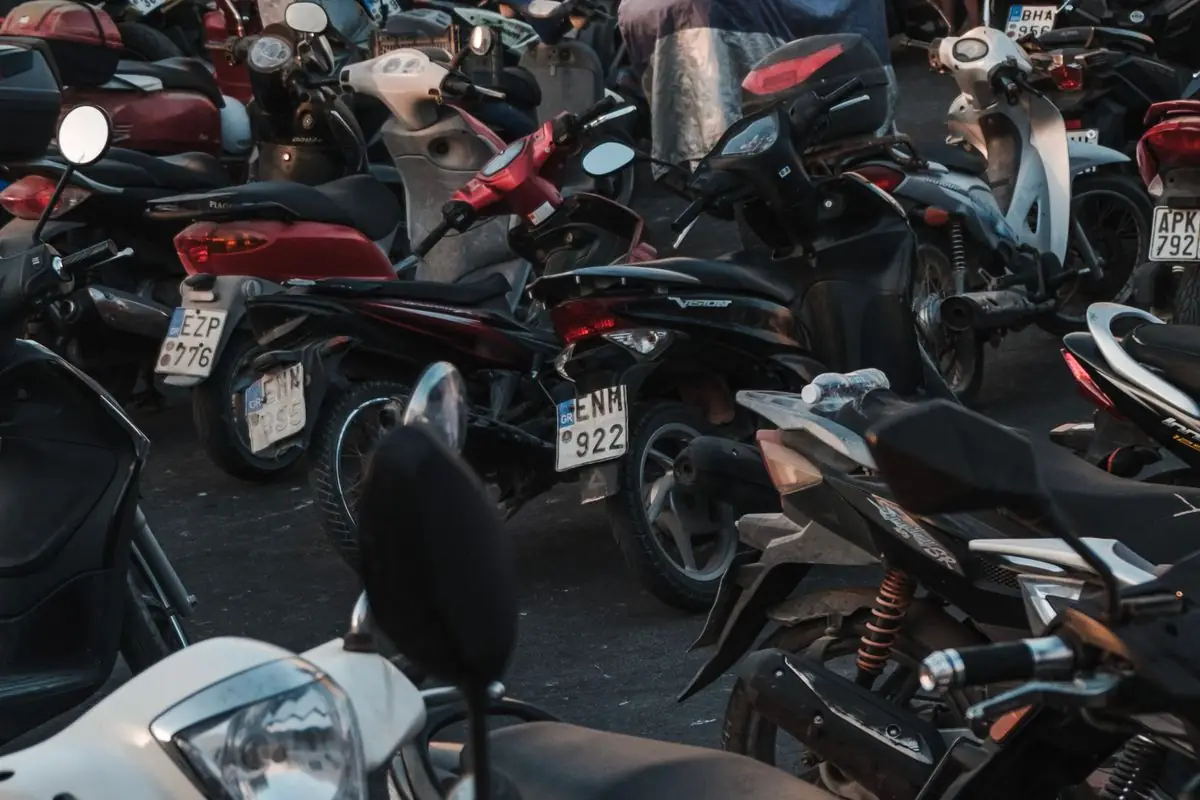
At the start of the school day, the bike park of a high school or university takes thousands of vehicles in a few dozen minutes. The problem is like a factory bike park, with three differences: many vehicles have no plate, the riders are minors, and parents come to pick up right at the gate.
Many vehicles have no plate
Under Vietnam’s 2024 Law on Road Traffic Order and Safety, a person must be at least 16 to ride a motorbike. Lower secondary pupils and some upper secondary pupils ride bicycles and e-bikes, which have no plates. A bike park that relies on a plate camera has nothing to read.
MSTAR Park uses the card as the main identity. A vehicle without a plate still enters on a student card or a parking card; the camera stores a photo of the whole vehicle and the rider at entry. At the exit, the guard sees the entry photo next to the exit photo to compare. Someone without a card gets a temporary single-pass card from the guard, with the photo attached to it.
A student loses a card
Children lose cards every week, so the procedure has to be clear before it happens. The guard looks the entry up by plate or by name, compares the rider’s photo at entry with the student in the lane, blocks the old card so nobody can reuse it, then lets the bike out under the school’s procedure, with a written record. The school office issues a new card later.
Parents at pick-up
Parents who drive into the visitors’ park use a single-pass ticket. A student’s bike leaves the bike park only with that student’s own card. What parents worry about most, someone else taking their child’s bike, is answered by checking the card, the plate if there is one, and the photos on every exit.
The first 30 minutes of the morning
A university in Indonesia with more than 7,000 students and two parks with 1,979 motorbike spaces counted 4,239 entries in one day. Between 7:00 and 7:30 alone, 405 vehicles came in, about 10% of the day, 13.5 a minute on average. In the afternoon the exit peak, 5:00–5:30 pm, had 374 vehicles; at midday the park was over capacity.
With an entry lane at about 5 seconds per vehicle by our estimate, one lane passes 12 a minute; 13.5 a minute needs 2 lanes. That is a 30-minute average. The busiest 5 minutes are higher still, so engineers count again during the survey.
No faces or fingerprints from students
Children’s data is protected more strictly under the 2025 Law on Personal Data Protection: the legal representative exercises the child’s rights. MSTAR Park uses cards, plates and photos of the vehicle; MSTAR Access uses cards and codes. The school does not have to collect students’ biometric data. The software has tools to set retention periods and delete data; the school is the data processor, the software is a supporting tool.
Installing during the holidays
Pilot one bike-park lane first and measure lane speed with the school. Install the rest during the summer holidays or outside school hours; the old method runs alongside until every student has a card.