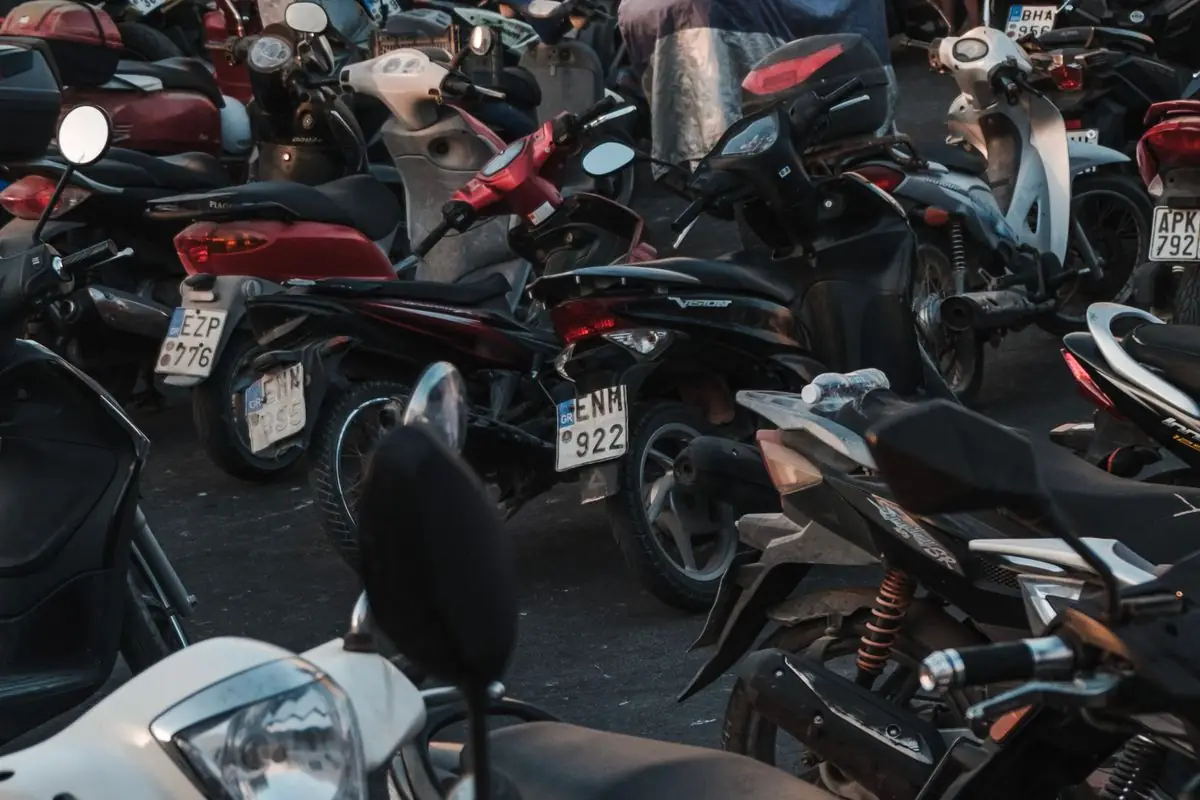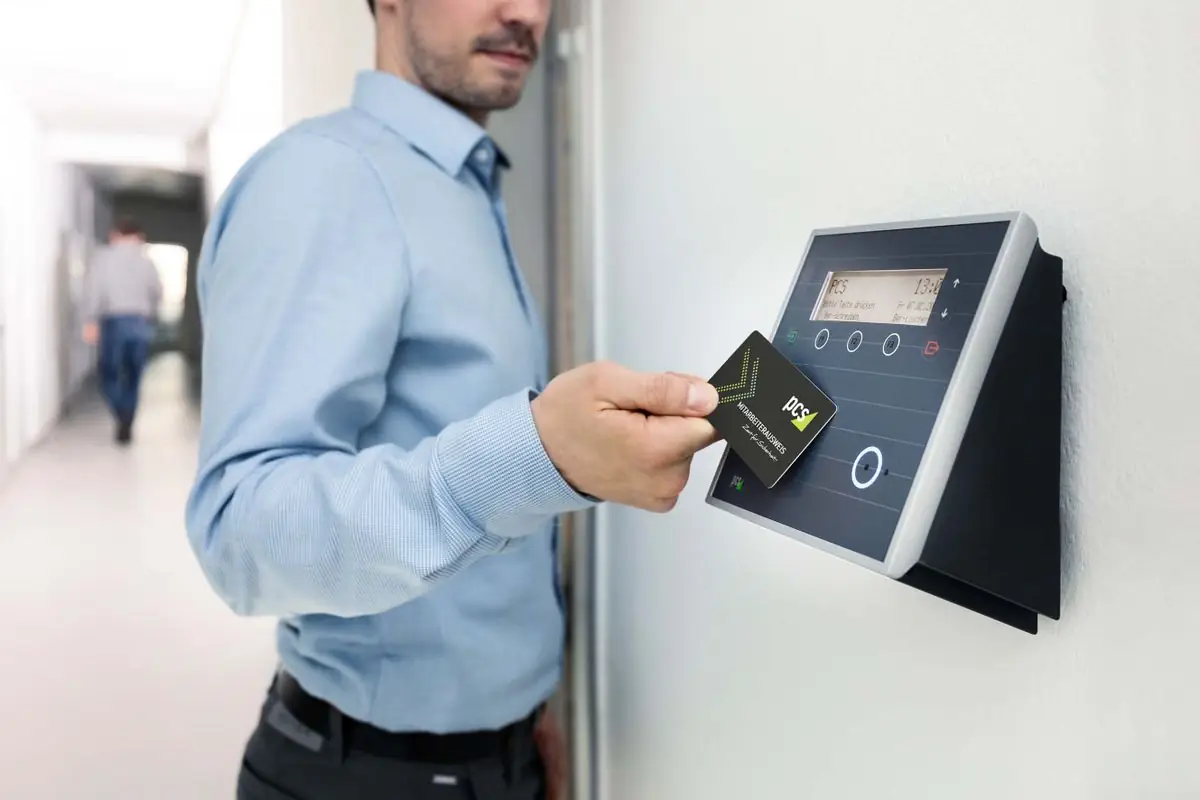
The end of a shift is when everyone notices the bike park: motorbikes queue back onto the internal road, guards cannot check tickets fast enough, people get home fifteen minutes late. The first question owners ask is which system to install to make it faster. The better question is how many lanes are needed.
The formula parking designers use
Parking design guidance in the US uses a simple formula: the number of lanes is the peak-hour traffic divided by the capacity of one lane times a utilisation factor.
- Peak-hour traffic: vehicles through the gate in the busiest hour, not the daily total.
- Lane capacity: 3,600 seconds divided by the seconds per vehicle.
- Utilisation factor: a lane never runs full. For automated prepaid parking such as monthly cards it is 0.8 with 1 lane, 0.9 with 2, 0.925 with 3 and 0.95 from 4 lanes. When every pass is paid in the lane, it drops to 0.5–0.8.
The utilisation factor is the part people skip. A lane sits empty when vehicles arrive unevenly, and stops when someone digs under the seat for a card. Assume the lane runs full and you will always be a lane short.
Example 1: the exit of a university at closing time
A university in Indonesia has a bike park much like Vietnam’s: mostly motorbikes, a ticket at the entry, a staff member matching ticket to bike at the exit. The university installed gates because motorbikes were being stolen on campus. Between 4 and 5 pm, 671 motorbikes left through the exit; manual ticket checks took 9.3 seconds per vehicle on average, and the motorbike queue was about 55 metres long.
By the formula: 9.3 seconds per vehicle is about 387 vehicles per hour per lane. One lane at a factor of 0.8 leaves about 310, far short of 671. Two lanes at 0.9 give about 697, just enough. The university needs 2 exit lanes and opens 1.
Now replace manual checks with a faster lane at about 7 seconds per vehicle: one lane passes about 514 vehicles an hour, 411 at a factor of 0.8. Still short, still 2 lanes. At peak time, the number of lanes decides the length of the queue more than the technology in the lane. A good system makes each pass faster and more accurate, but it cannot replace a missing lane.
Example 2: a factory at shift overlap
The motorbike park of a factory in Indonesia has 168 spaces for 463 people, including staff, contractors and loaders. Counted hour by hour from 6 am to 6 pm on two weekdays, the first hour of the morning shift took 43–48% of the day’s entries. During the 1–2 pm shift change, 76–103 bikes came in while only 36–46 left, and the number of bikes in the park reached 186–203. Bikes spilled into the aisles.
Two lessons for factories. First, the bike park has to be sized for the shift overlap, not for the headcount of one shift. Second, at shift change the entry and exit lanes are busy at the same time, so an exit lane cannot be borrowed as an entry lane.
Working it out for your bike park
You need two numbers: the vehicles that pass in the busiest 5 minutes, and the seconds per vehicle in the lane. Take the busiest 5 minutes because vehicles do not arrive evenly through the hour; an hourly average underestimates. If you have no count yet, the figures above give a first guess: at the factory, the first hour of the shift took about 40–50% of the day’s entries; at another university in the same country, the first 30 minutes of the morning took about 10%.
For MSTAR Park, engineers start from 5 seconds for an entry lane and 7 seconds for an exit lane, then measure again during the survey. For example: 450 motorbikes in the busiest 5 minutes is 90 per minute. A 5-second entry lane passes 12 per minute, so 8 lanes are needed, plus 1 spare. With a 10-second ticket-issuing lane, the same traffic needs 15 lanes, plus 1 spare.
One thing we have to say plainly
An MSTAR Park exit lane, about 5–8 seconds by our estimate, is on a par with the automated card exit measured at 6.7 seconds in the study above. Against a card system, MSTAR Park is not faster. It is better in that the guard sees the entry photo next to the exit photo, there is a plate to cross-check, and there are counts per lane and per hour to show when another lane should open.